 Luxury Inca Trail
Best Time to Hike the Inca Trail
The best time to hike the Inca Trail is the dry season, and the worst is February, when the trail closes entirely. This guide gives the month by month weather for Cusco and Machu Picchu, explains the two seasons, and covers the February closure, cold nights at camp, permit sell-outs by month and festivals such as Inti Raymi. Every figure comes from the published sources named in each section. When you have picked your month, compare the luxury Inca Trail tours on this site to see what each operator includes, and read the separate guide to Inca Trail permits for how the daily quota works.
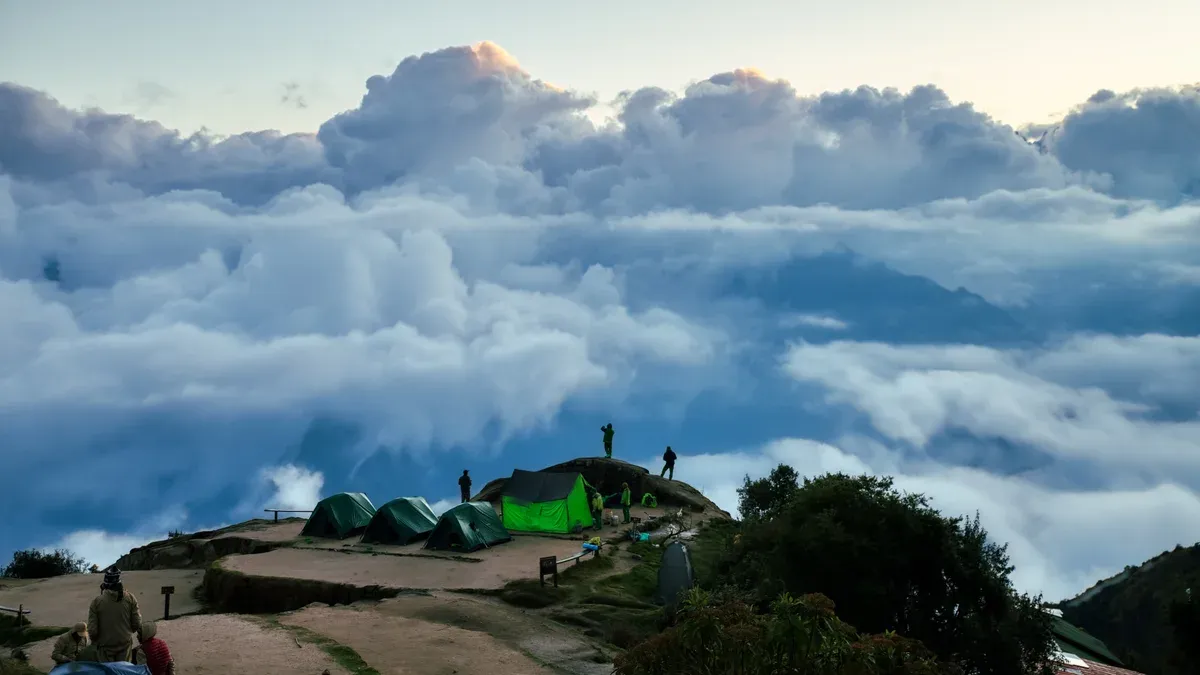
The Phuyupatamarca camp above the cloud line. Photo: Christoph Strässler, CC BY-SA 2.0, via Wikimedia Commons
Quick answer The short answer
The best time to hike the Inca Trail is the dry season, with May to September at its core (Salkantay Trekking lists the dry season as April to October), when June rain in Cusco falls to just 3.3 mm. July and August have the most stable conditions of the year, and June nights at camp can reach freezing. February is the worst month: the trail closes for the whole month and reopens on 1 March.
Key takeaways
- For the driest, most stable footing, July and August are the strongest months. A 4-day trek such as the 4-Day Inca Trail with Panoramic Train supplies a sleeping pad, pillow and rain poncho for the cold nights.
- April and May are the balanced shoulder months, with fewer crowds than peak season. The 4-Day Inca Trail with Vistadome Train is a group trek of up to 14, listed at $835 per person.
- Permits for May to September sell out fastest, and Salkantay Trekking advises booking the classic trek 6 to 8 months ahead. The mechanics are covered in the guide to Inca Trail permits.
- See how each trek stacks up in the site's comparison table, or what the premium treks add under what luxury changes.
Inca Trail Weather by Month
The figures below come from Wikipedia's Cusco airport climate table, which records mean highs, mean lows and monthly rain for the city where most treks begin. Cusco sits at about 3,400 metres (11,155 feet), with sources ranging from 3,200 to 3,450 metres, so these are highland figures, not Machu Picchu ones.
The Twelve Months at a Glance
The table uses the Cusco airport figures for temperature and rain, since Cusco is the departure city for the classic trek from Km 82. Higher ground on the trail runs colder than these numbers, and Dead Woman's Pass (Warmi Wañusca) reaches about 4,215 metres, or 4,200 metres (13,780 feet) on its own page, where temperatures can drop below freezing at night in any month. The trail column notes closure, footing and crowd patterns from TreXperience's Inca Trail weather guide and the closure notices.
A useful context figure: Cusco's annual precipitation is 727.7 mm. Machu Picchu itself is far wetter, with Wikipedia giving the citadel an annual 2,010 mm of rain (its Aguas Calientes page says 2,116 mm, and Salkantay Trekking's monthly figures add up to far less) and a mean temperature near 18 C.
| Month | High / low | Rain | Trail |
|---|---|---|---|
| January | 20.5 / 8.0 C | 153.4 mm | Wet season, low to medium crowds |
| February | 20.3 / 8.0 C | 132.1 mm | Closed all month, reopens 1 March |
| March | 20.5 / 7.8 C | 105.9 mm | Reopens, wet, permits sell quickly |
| April | 21.0 / 6.2 C | 38.4 mm | Shoulder month, fewer crowds |
| May | 21.2 / 3.6 C | 7.1 mm | Dry, shoulder month, permits tight |
| June | 20.8 / 1.9 C | 3.3 mm | Very stable, freezing nights, high crowds |
| July | 20.6 / 1.2 C | 5.9 mm | Most stable, freezing nights, high crowds |
| August | 21.5 / 2.8 C | 6.6 mm | Frost fades, very stable, high crowds |
| September | 21.7 / 5.0 C | 18.0 mm | Very stable footing, high crowds |
| October | 21.9 / 6.8 C | 54.5 mm | Rain returns |
| November | 22.3 / 7.6 C | 77.3 mm | Rainy season building |
| December | 21.1 / 7.8 C | 125.2 mm | Wet season, low to medium crowds |
Reading the Table
Three things stand out. First, daytime highs barely move: every month in Cusco averages between 20.3 and 22.3 C, so the seasons are defined by rain, not warmth. Second, the lows swing hard. July's mean low is 1.2 C against January's 8.0 C, and Cusco's record low is minus 7.0 C in May and July. Pack for freezing nights whenever you trek. Third, rain flips quickly: May drops to 7.1 mm from April's 38.4 mm, and October climbs back to 54.5 mm from September's 18.0 mm.
Remember the table describes Cusco. On the trail, camps sit higher and colder, and at Machu Picchu the pattern shifts again. Wikipedia lists January at 341 mm and February at 325 mm, with May to July the driest, and Aguas Calientes averaging annual rain of about 2,116 mm with the heaviest fall from December to March. Aguas Calientes itself stays mild year round, with mean daily highs of 20 to 23 C and lows of 9 to 12 C, because it sits at about 2,040 metres, nearly 1,000 metres lower than Cusco.
Sources: Wikipedia Cusco climate table, TreXperience Inca Trail weather
Dry Season, Wet Season and February
Two seasons split the Inca Trail year, and they do not agree with every source on where the boundaries fall. Here are both sides and the figures behind them.
The Dry Season: May to September at Its Core
TreXperience rates dry season footing from June to September as very stable, with crisp sunny days and July and August as the most stable trekking conditions with clear skies. It also calls August one of the best months as the frost fades, a useful signal if you want dry trail without the hardest nights. The trade is crowds and permits: TreXperience rates crowds as high from June to September, and peak season permits for May to September sell out fastest. On The Go Tours adds that July and August overlap with Northern Hemisphere holidays and that permits sell out months ahead.
The cost of stability is cold. Nights on the trail in June and July can reach freezing, and above 3,500 metres temperatures can drop below freezing at night in any month. Camping comfort therefore matters in the dry season. On the $1,499 Premium 4-Day Inca Trail Trek, every two hikers get a four-person tent plus both a camping mattress and an inflatable mattress. The driest single month depends on where you measure. Cusco's driest is June at 3.3 mm, and Salkantay Trekking calls June the driest month at Machu Picchu too, though it warns hailstorms are possible in July.
The Wet Season: November to March
Salkantay Trekking defines the rainy season as November to March and the dry season as April to October, and rain returns in October and November before increasing through the rainy season. Another weather summary pushes the wet season wider, to October to April, so treat October and April as months where sources disagree rather than as settled dry months. Crowds drop in the wet: TreXperience rates them low to medium from December to March.
At Machu Picchu, Salkantay Trekking's monthly figures show March as the heaviest rain month at 151 mm, and Wikipedia's citadel table puts January at 341 mm. Rain brings real trail risks in the deepest wet months. February is described as the height of the rainy season with heavy rain, landslides, fog and swollen rivers, and the trail shuts for maintenance. If you must travel in the wet season, the citadel itself stays open all year, and the short trail options, such as the $585 Short Inca Trail with 4-Star Hotel, keep a hotel night in the mild Aguas Calientes valley instead of a high camp.
The February Closure
The Inca Trail closes each February and reopens on 1 March. The February closure covered routes 1, 2, 3, 5 and 6 of the network, and about 60 specialists and workers carried out maintenance starting from Piscacucho village in Ollantaytambo. The work includes repairing stonework, stabilising terraces, clearing vegetation and inspecting bridges. There is precedent for closures running long: the 2025 closure extended into late March because of heavy rain and natural events.
Two practical consequences follow. First, February trekkers cannot walk the classic trail at all, but Machu Picchu citadel stays open, so you can still visit Machu Picchu itself in February. Second, March fills fast: Alpaca Expeditions says March permits sell out quickly and suggests booking six months or more ahead. For the closure rules and permit quotas in depth, see the guide to Inca Trail permits, and for how closure dates interact with ticketing, the section on permits and the February closure on the homepage of this site.
Festivals and Peak Pressure
June carries the year's biggest festival. Inti Raymi is celebrated every 24 June on the esplanade of Sacsayhuamán, Wikipedia ranks it the second largest festival in South America, and it was first celebrated in 1412, banned by Spanish colonists after 1535 and revived in 1944. On The Go Tours warns that trains and hotels in Cusco book out well ahead around Inti Raymi week, which stacks on top of June already being a high-crowd, fast-selling permit month.
The other pressure comes from school holidays. On The Go Tours says July and August overlap with Northern Hemisphere holidays and that Inca Trail permits sell out months ahead in that window. If you want to avoid the July and August holiday crush, October is the nearest alternative, with 54.5 mm of rain at Cusco as the rain returns.
Sources: TreXperience Inca Trail weather, Andina February closure notice, Wikipedia Inti Raymi
What Is the Best Time of Year to Trek to Machu Picchu?
Seasons, rain and crowds through the year. Third-party video by EverTrek. This site did not shoot it and has no relationship with the creator.
Crowds and Permits by Month
Permit scarcity decides your dates as much as weather does. The daily cap is fixed, so the driest months are also the hardest to book.
How the Cap Works
The Inca Trail issues 500 permits per day. About 200 go to trekkers and the remaining 300 go to guides, porters and support staff. Each permit is tied to one passport and is non-transferable and non-refundable.
Independent hiking is not allowed, so you book through a Ministry of Culture authorised agency. The mechanics of quotas and release dates sit on the Inca Trail permits page, which owns that topic in depth.
| Permit fact | Figure |
|---|---|
| Daily cap, everyone on the trail | 500 |
| Permits for trekkers | about 200 |
| Permits for guides, porters and staff | about 300 |
| Transferable or refundable | No |
Which Months Sell Out First
Peak season permits for May to September sell out fastest. TreXperience rates crowds as high from June to September and low to medium from December to March. Alpaca Expeditions says March permits also sell out quickly after the trail reopens.
For the 2026 season, Ministry of Culture sales opened on 27 October for January treks at 9:00 a.m. Peru time, March opened on 28 October, April on 29 October, May on 30 October and June on 31 October. July opened on 3 November and August to December opened on 4 November.
| Trek month | Crowds | How far ahead to book |
|---|---|---|
| May to September | High, permits sell out fastest | 4 to 6 months for June to August, general advice is 6 to 8 months |
| March | Sells out quickly after reopening | 6 months or more |
| December and January | Low to medium | Not stated |
| February | Trail closed | Not bookable |
Festivals Push Demand Up
Inti Raymi runs every 24 June on the esplanade of Sacsayhuamán in Cusco. Wikipedia ranks it the second largest festival in South America. On The Go Tours says trains and hotels in Cusco book out well ahead around Inti Raymi week, and that July and August permits sell out months ahead because of Northern Hemisphere holidays.
If you want June, book the moment permits open. The 4-Day Inca Trail with Vistadome Train at $835 per person includes the guide taking all entry fees, but permits still go through the same capped pool.
- Inti Raymi falls on 24 June each year
- Cusco trains and hotels book out early that week
- May to September permits sell out fastest
The February Closure
The trail network closes every February and reopens on 1 March. The closure covers routes 1, 2, 3, 5 and 6 of the network. February is the height of the rainy season with heavy rain, landslides, fog and swollen rivers.
About 60 specialists and workers do maintenance from Piscacucho village in Ollantaytambo, repairing stonework, stabilising terraces, clearing vegetation and inspecting bridges. The 2025 closure ran to late March because of heavy rain, so the reopening date can slip. The Machu Picchu citadel itself stays open all year, so you can still visit in February without the trail.
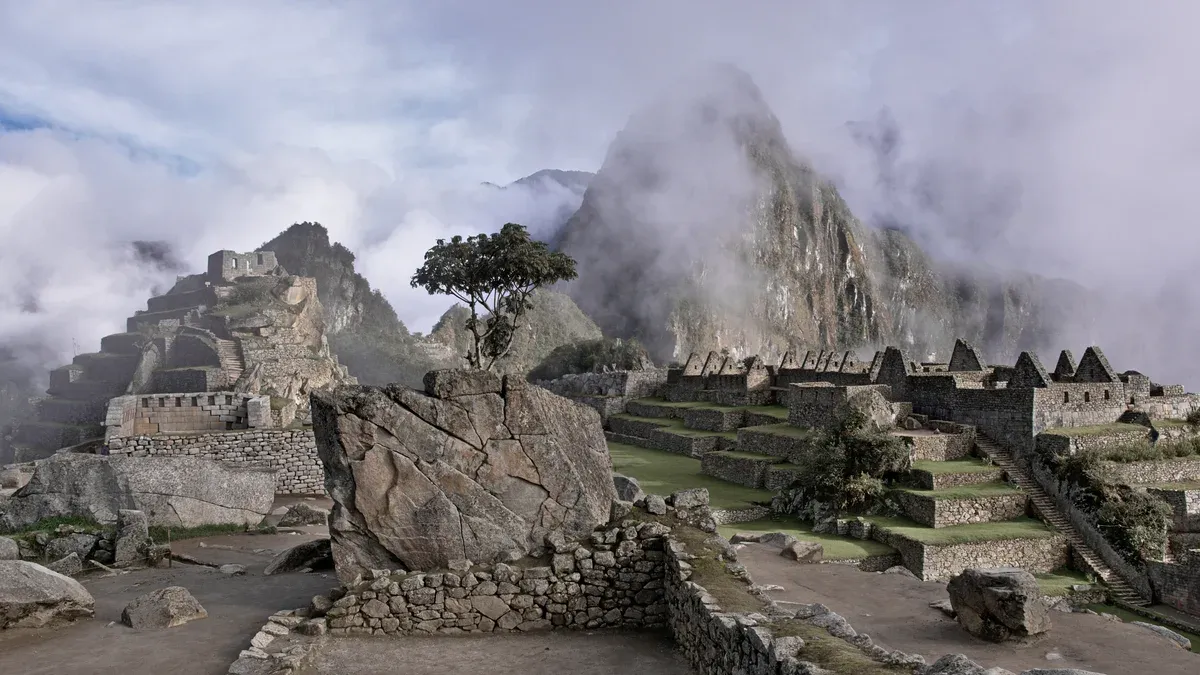
Machu Picchu in morning cloud. Photo: Tomas Sobek tomas_nz, CC0, via Wikimedia Commons
The Best Month for You
There is no single best month, only the best month for your priorities. Match the season to what you want from the trail.
For the Most Stable Weather
TreXperience rates July and August as the most stable trekking conditions with clear skies, and rates June to September footing as very stable. Cusco airport records give July a mean low of 1.2 C with just 5.9 mm of rain, and August 6.6 mm. The tradeoff is cold: nights in June and July can reach freezing at camp, and Cusco's record low is minus 7.0 C. Pack for frost if you camp in these months.
| Month | Mean high at Cusco | Mean low at Cusco | Rain |
|---|---|---|---|
| June | 20.8 C | 1.9 C | 3.3 mm |
| July | 20.6 C | 1.2 C | 5.9 mm |
| August | 21.5 C | 2.8 C | 6.6 mm |
For the Best Balance
April and May are the shoulder months TreXperience rates as balanced, with fewer crowds than peak season. May sits just 7.1 mm of rain at Cusco against 38.4 mm in April, with a mean low of 3.6 C. Peak season permits for May also sell out fastest. September also works well: 18.0 mm of rain, a mean high of 21.7 C, and TreXperience still rates crowds as high through September.
| Month | Mean high | Mean low | Rain | Crowds |
|---|---|---|---|---|
| April | 21.0 C | 6.2 C | 38.4 mm | Fewer than peak |
| May | 21.2 C | 3.6 C | 7.1 mm | Fewer than peak |
| September | 21.7 C | 5.0 C | 18.0 mm | High |
For Fewer People
December to March brings low to medium crowds, but also the rain. January sees 153.4 mm of rain at Cusco and the trail shuts entirely in February. November sits in between with 77.3 mm and a mean high of 22.3 C. If you want the trail experience without the deepest rain, early November or late March after reopening are the practical choices, and you should book six months or more ahead for March because permits there sell out quickly.
- November: 77.3 mm of rain, warm days
- March: heavy rain but the trail reopens on 1 March
- February: trail closed, citadel open
Pick by Traveller Type
Families and first-timers get the easiest conditions in May or September, when the trail is dry but the nights are less brutal than in June. Photographers chasing clear views of Dead Woman's Pass at about 4,215 metres (4,200 on some sources) should take July or August and accept freezing camps. Travellers who want milder nights than June to August can look at late September, when Cusco's mean low is 5.0 C and rain is 18.0 mm.
If you cannot take four days off, the Short Inca Trail with 4-Star Hotel at $585 per person runs the same dry-season logic over two days with a hotel night instead of a tent.
| Traveller type | Best months | Why |
|---|---|---|
| First-timers and families | May, September | Dry trail, milder nights than June and July |
| Photographers | June to August | Clear skies, very stable footing |
| Crowd-avoiders | December, January, April | Low to medium crowds, more rain |
| Cold-sensitive campers | April, May, September | Milder mean lows at Cusco |
Match the Month to the Trek
The 4-Day Inca Trail with Panoramic Train at $798 per person supplies a sleeping pad, pillow and rain poncho, useful in any month but essential for the freezing June and July camps. For deep dry-season comfort with a private group, the Luxury 4-Day Inca Trail at $6,222 per person adds massage therapists at every camp, which matters after a 4 to 5 hour climb to Dead Woman's Pass. Whichever you choose, the Inca Trail to Machu Picchu route guide explains what each day demands.
- May and September: easiest all-round conditions
- June to August: clearest skies, hardest bookings, coldest nights
- October: warming nights, returning rain
- November to March: quietest, wettest, February closed
Timing Tips for the Inca Trail
Five moves that make your dates work, and four mistakes to avoid.
Do
- Do book 6 to 8 months ahead for a classic trek, because Salkantay Trekking advises exactly that lead time and peak permits sell out fastest.
- Do check permit release dates each October, because Ministry of Culture sales for the next season opened in late October and early November for 2026 treks.
- Do carry a sleeping bag rated for frost if you camp in June or July, because trail nights in those months can reach freezing and Cusco's record low is minus 7.0 C.
- Do acclimatise in Cusco first, because the city sits at about 3,400 metres (11,155 feet, with sources ranging from 3,200 to 3,450 metres), altitude sickness can appear from about 2,500 metres, and sleeping altitude should rise by no more than about 500 metres a day above 3,000 metres.
- Do consider the shoulder months of April, May and September, because TreXperience rates them as balanced months with fewer crowds than peak season and the rain is modest at 38.4 mm, 7.1 mm and 18.0 mm at Cusco.
Don't
- Don't plan the trail in February, because the network closes all month for maintenance and reopens on 1 March, and the 2025 closure ran to late March because of heavy rain.
- Don't expect to hike independently at any time of year, because permits are sold only through Ministry of Culture authorised agencies and independent hiking is not allowed.
- Don't book a June to August trek late, because those permits sell out months ahead and operators recommend 4 to 6 months of lead time at minimum.
- Don't fix your dates before checking the permit is included in your tour price, because listings differ and the rules on the Inca Trail permits page explain what each permit covers.
Best Time to Hike the Inca Trail: FAQ
What is the best month to hike the Inca Trail?
May and September are the milder dry-season choices. TreXperience rates July and August as the most stable, but nights there can freeze, while May has 7.1 mm of rain at Cusco and milder lows. Compare seasons and tours such as the 4-Day Inca Trail with Vistadome Train before fixing dates.
When should I book Inca Trail permits?
Six to eight months ahead for a classic trek, and at least 4 to 6 months for June to August, per Salkantay Trekking. The Inca Trail permits guide covers the rules. Peak season permits for May to September sell out fastest.
Is the Inca Trail open in February?
No. The trail network closes all February for maintenance and reopens on 1 March. February is the height of the rainy season, and the 2025 closure ran to late March. The Machu Picchu citadel stays open year round, as covered in the Inca Trail permits page.
How cold are the nights on the Inca Trail?
In June and July nights at camp can reach freezing, and Cusco's record low is minus 7.0 C. Temperatures above 3,500 metres can drop below freezing at night in any month. Tours like the 4-Day Inca Trail with Panoramic Train supply a sleeping pad and pillow, but bring a warm sleeping bag.
When is the rainy season on the Inca Trail?
Salkantay Trekking puts the rainy season at November to March, though rain returns from October and builds through the season, and another summary says October to April. Cusco gets 153.4 mm in January against 3.3 mm in June. See the month by month tables above and the Inca Trail route guide for what rain means on each day.
When should I avoid Machu Picchu?
Avoid the deepest rain of January to March if you want clear citadel views, and note that around Inti Raymi on 24 June Cusco trains and hotels book out well ahead. For timing that includes the trek itself, start with the best time to hike the Inca Trail tables above.
The 4-Day Inca Trail with Vistadome Train at $835 per person includes the guide taking all entry fees and the Machu Picchu entrance fee, so once your month is chosen the essentials are covered.
11,562 reviews at a 5.0 rating, groups of up to 14, and a personal porter for up to 7 kg of your gear.